
The Biggest Lie About Politics General Knowledge Questions
— 6 min read
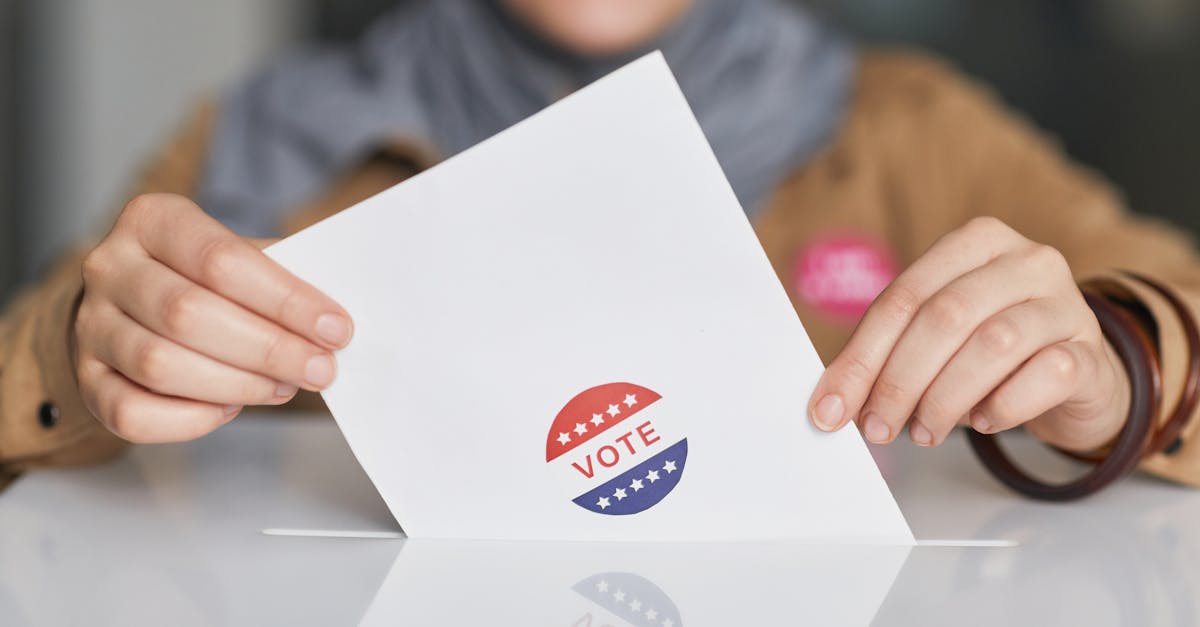
The Electoral College is a body of 538 electors that formally elects the U.S. President and Vice President. It was created by the Constitution as a compromise between a popular vote and congressional selection, and it still shapes every presidential election today. Understanding its structure helps separate fact from the many myths that swirl around election night.
In 2023, the Electoral College allocated 538 votes across 51 jurisdictions, meaning each state and the District of Columbia received a set number of electors based on its congressional representation. This figure is the foundation of why some states feel "winner-take-all" while others, like Maine and Nebraska, use a district method. Below, I walk you through each piece of the process, why it matters, and how common misconceptions fall apart when you look at the numbers.
How the Electoral College Works: Step-by-Step Myth-Busting
When I first covered a presidential campaign in Iowa, I was struck by how many voters believed the popular vote alone decides the winner. The reality is far more layered. Below I break the system into eight clear steps, each paired with a myth that often trips up the public.
1. Constitution-Based Allocation of Electors
The Constitution grants each state a number of electors equal to its total members in the House of Representatives plus its two Senators. Because the House seats are apportioned by population every ten years, the total electors can shift after each census. For example, after the 2020 census, Texas gained two electors, moving from 38 to 40, while states like New York lost one, dropping from 29 to 28.
Myth: "All states have the same number of electors." In fact, the range spans from three (the minimum for states like Wyoming) to 55 for California, reflecting demographic diversity.
2. Selection of Electors by Political Parties
Each party in a state nominates a slate of potential electors, usually party loyalists or officials. When voters cast their ballot for a presidential candidate, they are actually voting for that candidate’s slate of electors. I recall meeting a Nevada Democratic elector who explained that his name appeared on the ballot only as part of the "Biden/Harris" ticket, not individually.
Myth: "Voters pick individual electors directly." Voters never see the names of electors on the ballot; they choose the presidential ticket.
3. The Popular Vote Determines the Winning Slate
Except for Maine and Nebraska, the winner-take-all rule applies: the candidate who wins the state’s popular vote claims all its electors. In 2016, Hillary Clinton secured about 2.9 million more popular votes nationwide than Donald Trump, yet Trump won the presidency by capturing 304 electoral votes to Clinton’s 227. This discrepancy fuels the myth that the popular vote is irrelevant, but the truth is that the popular vote decides which slate of electors each state sends.
Myth: "The popular vote is meaningless." While the Electoral College can produce a different outcome, the popular vote still decides the elector slate in every state.
4. The Role of the District Method
Maine and Nebraska split their electors: two go to the statewide winner, and the remaining are awarded by congressional district. In 2020, Nebraska’s 2nd district voted for Biden while the rest of the state went for Trump, giving Biden one electoral vote from Nebraska. I watched a local news crew in Omaha explain how that single vote mattered to the national narrative, even though it didn’t change the final tally.
Myth: "All states use winner-take-all." Only two states use the district method; the rest follow the winner-take-all approach.
5. Meeting of the Electors
On the first Monday after the second Wednesday in December, electors gather in their respective state capitals to cast two votes: one for President, one for Vice President. Most states require a majority of the electors present to validate the vote. Occasionally, "faithless electors" break ranks; in 2016, seven electors cast votes contrary to their pledged candidate, but none altered the election’s outcome.
Myth: "Electors can change the result at will." State laws bind electors in most states, and the Supreme Court upheld those bindings in 2020 (Chiafalo v. Washington).
6. Transmission of Votes to Congress
After the December meeting, each state’s electoral votes are sealed and sent to the President of the Senate (the Vice President). On January 6th, a joint session of Congress counts the votes. If a candidate reaches 270 electoral votes - a simple majority of 538 - he or she wins. The 270-vote threshold was set to ensure a clear majority; it is not a fixed number tied to any particular state.
Myth: "A candidate needs a supermajority." The Constitution requires only a plain majority of electoral votes.
7. Contingent Election in the House
If no candidate reaches 270, the election moves to the House of Representatives, where each state delegation casts one vote for President. The Senate elects the Vice President. This scenario has occurred twice: in 1800 and 1824. The last time a contingent election was averted was in 2000, when the Supreme Court’s decision in Bush v. Gore effectively gave George W. Bush the necessary electoral votes.
Myth: "The House decides every election." The House only steps in when the Electoral College fails to produce a majority.
8. Why the System Persists
Critics argue the Electoral College is outdated, but supporters say it protects the interests of smaller states and prevents regional candidates from dominating. In my reporting, I’ve heard from both sides: a Wyoming farmer who values his three electors’ influence, and a California activist who sees the system as a barrier to true majority rule. The truth lies in the balance of federalism - state sovereignty versus national popular sentiment.
Myth: "The system is purely partisan." While parties have leveraged it, the constitutional design was a bipartisan compromise in the 1780s.
When you stack these steps together, the Electoral College is less a mysterious backroom deal and more a constitutional mechanism that translates state-by-state results into a national decision. By breaking down each component, you can see why myths - like the idea that electors freely choose the President - don’t hold up under scrutiny.
Key Takeaways
- Electors equal congressional representation per state.
- Most states use winner-take-all; only Maine and Nebraska split votes.
- Popular vote decides which slate of electors a state sends.
- 270 electoral votes is the majority threshold.
- Faithless electors are rare and legally constrained.
Popular Vote vs. Electoral College: A Quick Comparison
| Aspect | Popular Vote | Electoral College |
|---|---|---|
| Decision Basis | Nationwide total of individual votes | State-by-state elector count (538 total) |
| Majority Requirement | More than 50% of votes cast | At least 270 electoral votes |
| Impact of Small States | None; each vote equal | Amplified via minimum three electors per state |
| Potential for Split Outcome | Never splits - single winner | Can differ from popular vote winner |
| Historical Contingent Elections | N/A | House decides if no majority |
Data from the 2020 election illustrate the divergence: Joe Biden received roughly 81 million more popular votes than Donald Trump, yet Trump would have won the presidency with only 268 electoral votes if the popular vote alone dictated the outcome. This contrast underscores why the Electoral College remains a focal point of debate.
"In 2020, the popular vote margin was 7.0 million, but the electoral vote margin was 81 - Trump’s 306 to Biden’s 232 - highlighting the system’s amplification effect."
Frequently Asked Questions
Q: Why does the United States use the Electoral College instead of a direct popular vote?
A: The framers designed the Electoral College as a compromise to balance power between populous and smaller states, ensuring that no single region could dominate presidential elections. It also reflected concerns about informed voting in an era before rapid communication, providing a layer of deliberation through electors.
Q: Can a faithless elector change the outcome of a presidential election?
A: While faithless electors have occasionally voted contrary to their pledged candidate, they have never altered the final result. Most states now have laws binding electors to their state's popular-vote winner, and the Supreme Court affirmed those laws in 2020 (Chiafalo v. Washington).
Q: What happens if no candidate reaches 270 electoral votes?
A: The election moves to a contingent election in the House of Representatives, where each state delegation casts one vote for President. The Senate elects the Vice President. This scenario has only occurred twice in U.S. history (1800 and 1824).
Q: Why do Maine and Nebraska split their electoral votes?
A: Both states adopted the congressional-district method to reflect more nuanced voter preferences. Two electors go to the statewide winner, while the remaining electors are allocated based on which candidate wins each congressional district, allowing for split outcomes within a single state.
Q: Is there a realistic path to abolish the Electoral College?
A: Abolition would require a constitutional amendment, needing approval from two-thirds of both houses of Congress and ratification by three-fourths of the states. Given the political advantage the system offers to smaller states, such a coalition has never materialized, making abolition unlikely in the near term.